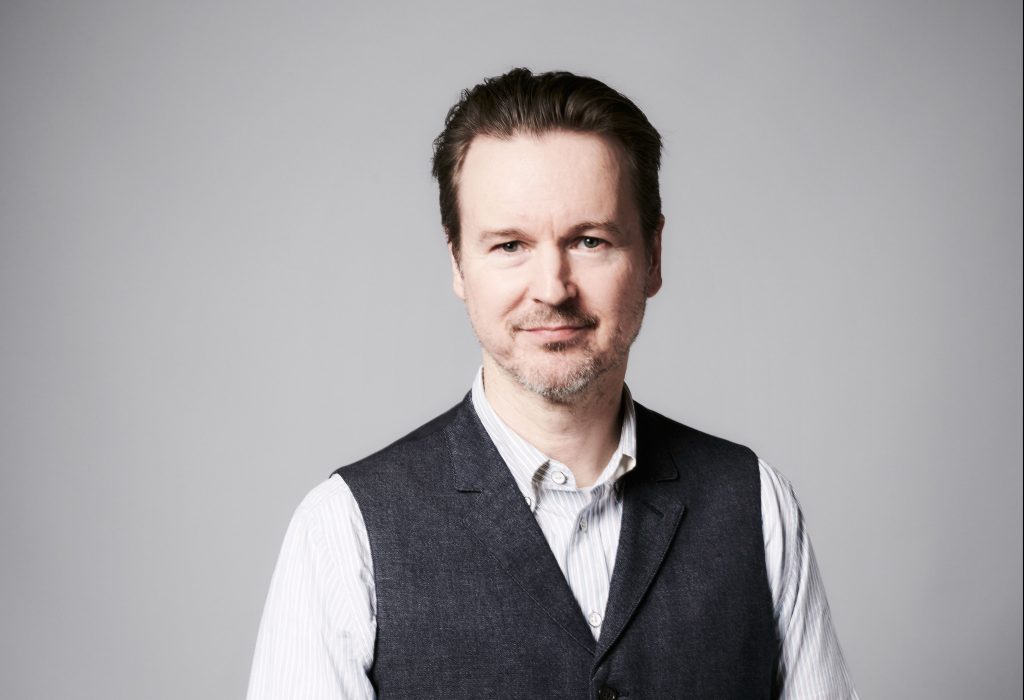
For a film that has spent years cultivating an aura of anticipation, The Batman: Part II has now encountered another unexpected interruption. Production on the long-awaited sequel has been temporarily suspended while director, writer and producer Matt Reeves steps away to attend to a family matter. DC Studios confirmed the development Monday, October 5, while emphasizing that Reeves retains the studio’s full support and that the production is expected to resume. The studio has not disclosed the nature of Reeves’ family circumstances, nor has it provided a timetable for his return.The immediate facts are therefore relatively uncomplicated, even if the broader implications are considerably more complicated. The Batman: Part II remains an active Warner Bros. and DC Studios production.
Robert Pattinson remains attached to reprise his role as Bruce Wayne and Batman. Reeves remains the filmmaker responsible for the project. And the sequel remains officially scheduled for February 18, 2028. What has changed is the certainty surrounding a production that has already endured years of delays and development challenges. Because filming had only recently begun after an unusually prolonged pre-production period, the latest interruption inevitably raises questions about whether the film can maintain its current schedule. At present, however, there is no confirmed indication that the February 2028 release date has been abandoned.The distinction between a temporary production pause and a substantive creative crisis is particularly important here. Nothing in the studio’s announcement suggests that Reeves has been removed from the project, that the screenplay has been discarded, that the cast has been reorganized, or that Warner Bros. has begun searching for a replacement director. Nor is there any credible evidence that the film has entered another development overhaul. The available reporting establishes a much narrower circumstance: Reeves has temporarily stepped away because of a personal family matter, and the studio has elected to pause production rather than proceed without its principal filmmaker. That is a meaningful distinction in an industry where production delays can easily become conflated with creative instability.Nevertheless, the timing makes the development consequential. The Batman: Part II has already become one of the most protracted major studio sequels in recent memory. The first film arrived in theaters in March 2022, introducing Pattinson’s iteration of the Dark Knight and earning substantial commercial and critical attention. The sequel was initially targeted for October 2025 before its release was repeatedly pushed. It subsequently moved to October 2026, then October 2027, and ultimately February 18, 2028. By the time the sequel reaches theaters under its current schedule, audiences will have waited almost six years between the two installments.
That lengthy interval has fundamentally altered the cultural position of Reeves’ Batman. When The Batman premiered, Pattinson’s casting remained one of the most closely scrutinized elements of the production. Reeves was attempting something that was familiar in concept but distinctive in execution: rather than constructing another conventional superhero spectacle, he approached Bruce Wayne through the traditions of American crime cinema, political noir and detective fiction. Gotham was presented not merely as a fantastical setting but as a diseased urban institution, one in which corruption had penetrated the police department, political establishment and criminal underworld alike. Batman consequently functioned less as an invulnerable comic-book icon than as an obsessive investigator learning, sometimes painfully, what his own mission meant.The result was a Batman film whose dramatic ambitions extended beyond the mechanics of superhero storytelling. Pattinson’s Bruce Wayne was inexperienced, emotionally damaged and consumed by vengeance. His understanding of crime was initially almost exclusively punitive. He believed that fear could function as an instrument of justice. Yet the film’s conclusion complicated that worldview. After Gotham was devastated by the Riddler’s campaign, Batman gradually recognized that his symbolic value could not be reduced to the terror he inspired in criminals. He could also represent rescue, solidarity and hope. The transformation was subtle, but it established the foundation for a second chapter in which Bruce could become a more mature version of the character. That evolution is one of the central reasons The Batman: Part II carries such unusually high expectations.
The sequel is not simply being asked to repeat the aesthetic formula of its predecessor. It is being asked to demonstrate that Reeves’ version of Gotham can sustain an extended narrative architecture. That challenge became even more significant after The Penguin, the HBO series centered on Colin Farrell’s Oswald Cobb, demonstrated that the world established by the first movie could support a substantial television narrative of its own.The Penguin effectively expanded Reeves’ Gotham between films. Rather than treating the movie as an isolated interpretation of Batman, the franchise began developing an interconnected crime saga surrounding the city’s competing institutions and criminal organizations. Farrell’s character, who was a memorable supporting presence in The Batman, became the protagonist of a television series capable of exploring the social and political consequences of the film’s events at a considerably deeper level. The series’ success, including its substantial awards recognition, gave Reeves’ interpretation additional cultural legitimacy. The Batman sequel therefore returns to a world that has already evolved beyond the boundaries of its original film.That development also makes the casting of the sequel particularly consequential. Pattinson remains at the center, while Jeffrey Wright returns as James Gordon and Andy Serkis reprises his role as Alfred Pennyworth. Farrell is also returning as Oswald Cobb, meaning that the criminal infrastructure developed in The Penguin can potentially intersect directly with Batman’s next major investigation. Jayme Lawson and Gil Perez-Abraham are also returning as Bella Reál and Officer Martinez, respectively.The sequel is simultaneously introducing several prominent performers into this increasingly elaborate version of Gotham. Sebastian Stan has been cast as Harvey Dent, a character whose importance within Batman mythology is difficult to overstate. Scarlett Johansson is also joining the production, alongside Charles Dance, Brian Tyree Henry and Sebastian Koch. The secrecy surrounding several of those roles has naturally generated considerable speculation, although the studio has revealed considerably less about the actual story than the casting announcements might suggest.Stan’s involvement is particularly interesting because Harvey Dent represents one of the most thematically fertile figures available to a filmmaker committed to a grounded Batman narrative. Dent traditionally embodies the fragile relationship between justice and corruption. Before becoming Two-Face, he is generally depicted as an ambitious prosecutor committed to confronting Gotham’s criminal establishment through legitimate institutions. His eventual transformation therefore represents more than the creation of another villain. It dramatizes the collapse of a legal system that was supposed to provide an alternative to vigilantism.In Reeves’ Gotham, that thematic possibility becomes even more compelling. The first film established a city in which corruption was not an isolated phenomenon but a structural condition.
Political leaders, police officers, wealthy families and criminal organizations were interconnected through decades of institutional compromise. Introducing Dent into such an environment provides the sequel with an opportunity to examine the relationship between Batman’s extralegal mission and Gotham’s conventional systems of justice. Whether Dent ultimately becomes Two-Face in this film, however, remains unknown, and assuming that his transformation is inevitable would go beyond what has actually been confirmed.The secrecy surrounding Johansson’s role similarly illustrates how carefully Reeves and the studio have protected the sequel’s narrative. While major productions increasingly use promotional campaigns years before release, The Batman: Part II has largely resisted revealing its central story. Reeves did provide a brief camera-test glimpse of Pattinson in the new Batsuit when the release date was moved to February 2028 in July, but even that footage was more atmospheric than explanatory. The teaser offered fans their first new visual impression of Pattinson’s Batman while withholding virtually everything about the plot.The production itself has also begun to generate a physical presence in the United Kingdom. Filming has taken place in London, while recent shooting in Glasgow transformed portions of the Scottish city into Gotham. Reports described streets being closed and modified for production, with Gotham imagery, American flags and artificial snow incorporated into the environment. The scale of those preparations underscores that the sequel was not merely approaching production in some abstract sense; cameras were actually rolling before the latest pause.That distinction matters because the current interruption arrives at a substantially different point in the production cycle than the delays that preceded it. The earlier postponements were largely associated with the prolonged development of the screenplay, industry-wide labor disruptions and the challenges of coordinating a major franchise production. The current pause is not being presented as a consequence of dissatisfaction with the story or a dispute between the filmmaker and studio.
Instead, it is a personal interruption occurring after production has already commenced.Consequently, the most immediate question is not whether The Batman: Part II will be made. It almost certainly will. The more relevant question is how long the pause will last and whether its duration will materially affect the February 2028 theatrical release.At this moment, there is no answer. Reports indicate that it is too early to determine whether the production pause will ultimately affect the release date. A short interruption could potentially be absorbed through scheduling adjustments, particularly if the production had already completed a meaningful amount of planned material. A prolonged absence, however, would introduce increasingly complicated logistical problems involving actors, crew availability, locations, post-production schedules and promotional commitments. The longer a production remains dormant, the more difficult it becomes to treat the original timetable as immovable.There is also a practical reason Warner Bros. should be reluctant to rush the production. The Batman: Part II is not merely another entry in a crowded superhero marketplace. It is one of the studio’s most important DC properties, and Reeves’ creative control is a central component of its identity. The value of the franchise lies partly in its differentiation from the larger interconnected DC Universe being developed under James Gunn and Peter Safran. Reeves’ Batman exists within a separate continuity, allowing the filmmaker to construct a self-contained crime saga without the immediate obligation to integrate Pattinson’s Bruce Wayne into the broader DC cinematic architecture.That separation provides Reeves with an unusual degree of creative latitude. He does not have to make Batman serve as a component of a massive crossover strategy. He can instead continue examining the character through the grounded, psychologically oriented framework established in the first movie. That approach may partially explain why the sequel has taken so long to develop. Reeves has repeatedly emphasized character and story rather than simply treating the movie as a mechanism for introducing the next villain.The downside is that the production schedule has become increasingly difficult for audiences to ignore. A six-year gap between installments inevitably changes the relationship between a franchise and its audience. Actors age. Cultural conversations change. Competing versions of characters emerge. Audiences move between streaming platforms and theatrical releases. The broader superhero market itself changes considerably within a six-year period.Pattinson has even acknowledged the physical demands of returning to the role. In recent comments about filming the sequel, the actor described the fight scenes as significantly more difficult than they were when he first played Batman. At 40, Pattinson is approaching the character differently from the way he did in the first film, and the prolonged production timeline has inevitably altered the physical circumstances surrounding the role.Yet that passage of time could ultimately benefit the character if Reeves uses it intelligently. The Batman introduced in 2022 was deliberately unfinished. He was a young man who had transformed personal trauma into a mission but had not yet developed a mature philosophy of justice. The sequel has the opportunity to present a Batman who understands the consequences of his actions more clearly. His challenge is no longer simply identifying criminals; it is determining what Gotham actually needs from him.That distinction could give the sequel greater thematic depth than a straightforward escalation of villains.The first film asked what happens when vengeance becomes a person’s entire identity. The second could ask what happens after that person realizes vengeance is insufficient. If Reeves follows that trajectory, the story could become less about Batman proving that he can defeat increasingly powerful adversaries and more about Bruce Wayne confronting the limitations of the worldview that initially created Batman.That possibility is particularly relevant in a Gotham that has already experienced catastrophic destruction. The Riddler did not merely attack individual people. His actions exposed and exploited the city’s institutional corruption, then culminated in an attack that left Gotham physically devastated. The consequences of that disaster should logically shape the sequel’s political and social environment.
A city recovering from such destruction would be fertile territory for criminal opportunism. Political leadership would face pressure to restore order. Law enforcement would confront public distrust. Wealthy interests could attempt to influence reconstruction. Criminal organizations could compete for territory left vacant by the collapse of established power structures. And Batman himself would have to confront a complicated question: does his existence contribute to stability, or does it merely become another variable in Gotham’s cycle of violence?That is where the introduction of Harvey Dent could become especially important.If the sequel places Dent within Gotham’s attempt to rebuild its legal institutions, Reeves could construct a philosophical contrast between two men pursuing justice through radically different methods. Dent represents institutional legitimacy. Batman represents vigilantism. Gordon occupies the uneasy middle ground, attempting to maintain cooperation between the two.Such a structure would be entirely consistent with the political and crime-noir sensibilities of the first film.It would also explain why patience may be more valuable than speed.The worst outcome for The Batman: Part II would not necessarily be another delay. The worse outcome would be a rushed sequel that sacrifices the deliberate world-building that made its predecessor distinctive simply because the studio became determined to meet a release date.The commercial pressures are obvious. Warner Bros. needs major theatrical franchises. Batman is one of the most valuable characters in popular culture. The studio has every incentive to get Pattinson back on screen as quickly as possible. But the same economic importance that makes the property valuable also creates an argument for protecting the creative process. A disappointing Batman sequel would not simply be another underperforming release. It would potentially damage one of the studio’s most carefully constructed contemporary franchises.For now, however, there is no evidence that such a scenario is unfolding.The production has paused. Reeves is dealing with a family matter. DC Studios has expressed support for him. The cast remains attached. The movie remains in production rather than cancellation. The February 18, 2028 release date remains the official target. Those are the facts available today.Everything else should be treated cautiously.That caution is especially necessary because the extraordinary anticipation surrounding The Batman: Part II creates an environment in which relatively small pieces of information can rapidly become exaggerated into claims about the project’s entire future. The absence of a restart date is not evidence that Reeves is leaving. A production pause is not evidence that the screenplay has failed. Another scheduling adjustment, if one eventually occurs, would not necessarily indicate that the film is creatively troubled.At the same time, pretending that the latest development has no scheduling implications would be equally simplistic. The movie has already experienced multiple delays, and every additional interruption reduces the flexibility available to the production. The eventual consequences will depend almost entirely on how long Reeves needs before returning and how Warner Bros. subsequently restructures the shooting schedule.For audiences, the frustrating reality is that there is nothing more concrete to wait for at the moment.There is no new trailer.There is no detailed plot synopsis.There is no confirmed restart date.There is no announced change to the release date.There is simply a film that has finally entered production after years of development, only to encounter another temporary interruption at a deeply personal level.And that may ultimately be the most important point surrounding today’s announcement.Behind the corporate machinery of Warner Bros., the billion-dollar value of the Batman intellectual property and the enormous expectations attached to Robert Pattinson’s return is an individual filmmaker dealing with circumstances that are more important than a production schedule. DC Studios’ decision to publicly support Reeves rather than dramatize the interruption is therefore significant in its own right.
For fans who have spent years waiting for the sequel, patience may be particularly difficult. But the long-term value of Reeves’ Batman lies precisely in the fact that the filmmaker has been allowed to approach the character with unusual deliberateness. The first film established a Gotham defined by corruption, grief, violence and institutional decay. Its sequel has the opportunity to deepen those ideas rather than simply increase the spectacle.The Batman does not need to return quickly.He needs to return with a story worthy of the world Reeves has built.For the moment, that means accepting another period of uncertainty. Production will resume when Reeves is able to return, and only then will the studio be in a position to determine whether the current schedule can survive intact. Until that happens, the February 18, 2028 date remains the target, but not an absolute guarantee.After years of delays, another question mark surrounding The Batman: Part II will inevitably frustrate audiences. Yet this particular interruption should not be interpreted through the same lens as the project’s earlier development problems. The current pause has been explicitly attributed to a family matter, and the studio has made clear that Reeves retains its support.The most responsible conclusion, therefore, is also the most straightforward: The Batman: Part II is delayed only in the immediate sense that its production has stopped. It has not been abandoned, Reeves has not been replaced, and the sequel remains on Warner Bros.’ release calendar.What happens next will depend on when Reeves returns and how much flexibility remains within an already complicated production schedule.Until then, Gotham waits.


Leave a comment